
Introduction: The Day the Floor Doesn’t Blink
Real speed in warehousing comes from software, not steel. Robotics software is the traffic cop that keeps people, AMRs, and conveyors in sync when the floor gets loud. Picture peak Friday: dock doors jam up, orders spike 3x, and a tote stalls at the worst time. When teams try to scale with more bots, warehouse automation software becomes the real lever, not another forklift. Data tells the same story: travel time can eat 40% of a shift, pick paths flip every few minutes, and your latency budget shrinks to 200 ms when aisles go hot. Edge computing nodes help, but only if your WMS and orchestration layer speak fast and clean. So here’s the question—how do you prevent a busy hour from turning into a bad day?
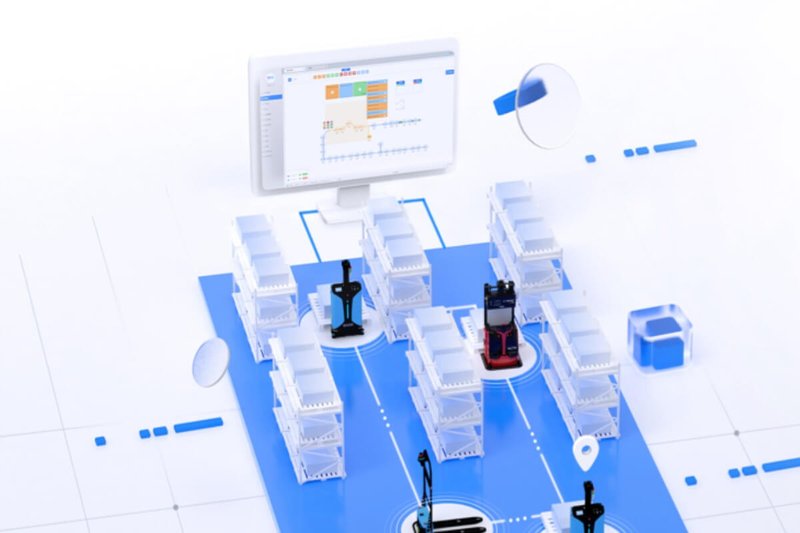
You line up the signals and make decisions before bottlenecks harden. That means tracking queue depth, dock turns, and AMR battery health in real time. It means your control loop doesn’t wait for end-of-batch reports to act. And yes, it means owning the message bus, not letting it own you. We’ll compare what breaks in the old playbook with what actually scales next.
The Hidden Fault Lines in Traditional Playbooks
Why do legacy playbooks break?
Classic stacks were built around waves and walls. The WMS batches picks, the WCS drives conveyors, and PLC logic guards the edges. It works—until volatility hits. Static routing pushes every tote down the same profitable lane, then that lane chokes. The message bus backs up, ROS 2 bridges to fleets lag, and pick lists go stale. Edge nodes can’t act because the source of truth is distant and slow. Throughput collapses in the busiest hour, or worse, starves in the quiet one—funny how that works, right?
The deeper flaw is control, not capacity. There is no shared, live state across robots, docks, and humans. No SLA-aware routing when SLAs shift mid-shift. No QoS on critical topics, so the wrong packets win. OPC UA and PLCs sit on one island; AMRs and ROS 2 topics sit on another. Look, it’s simpler than you think: you need three tight loops—perception, planning, execution—tied by an event-driven spine. That spine should prioritize safety PLC signals, handle exception bursts, and keep a clean audit trail. When the system can reassign tasks in milliseconds and throttle flows by zone heat, backorders drop and floor stress fades. That is the gap legacy waves can’t cross.
From Static Control to Live Orchestration: Principles for What’s Next
What’s Next
Modern warehouse automation software treats the floor like a living graph. Every tote, AMR, picker, and dock is a node with changing costs. New principles make it work: a digital twin that mirrors racks, lift states, and aisle heat; an event-driven WES that reacts to signals, not schedules; and a unified API layer that binds WMS/MES to fleets and PLCs. Messaging matters: MQTT or AMQP for telemetry, DDS for ROS 2 fleets, and clear QoS tiers. Edge inference reduces network chatter; safety PLC interlocks gate motion. Power converters and battery data feed tasking, so dispatch aligns with charge cycles. Then microservices roll forward without floor downtime—blue/green deploys, health checks, circuit breakers. You get graceful degradation under load— and yes, that’s as tricky as it sounds.
The shift is comparative and clear. Old world: batch waves, fixed routes, delayed truth. New world: continuous flows, dynamic slotting, and SLA-driven orchestration. Summarizing the lesson: performance rises when the system makes small, fast decisions close to the event, and when global state stays fresh. Advisory close, so you can pick well: judge (1) decision latency under stress—time from signal to actuation under a heavy queue; (2) orchestration quality—tasks per AMR-hour, dock turn variance, and backlog age; (3) openness and safety—ROS 2/OPC UA coverage, API rate limits, and safety PLC integration. Choose for the rhythm of your floor, not a slide deck. If you need a reference point that fits these principles without the fluff, see SEER Robotics.