
Learning the Quran is an important part of a child's Islamic education. Parents living in Denmark often want their children to develop a strong connection with the Quran while learning correct Arabic pronunciation, recitation, and basic Islamic knowledge. One common question parents ask is whether quran lessons for kids in denmark include Tajweed and whether young learners can understand its rules at an early age.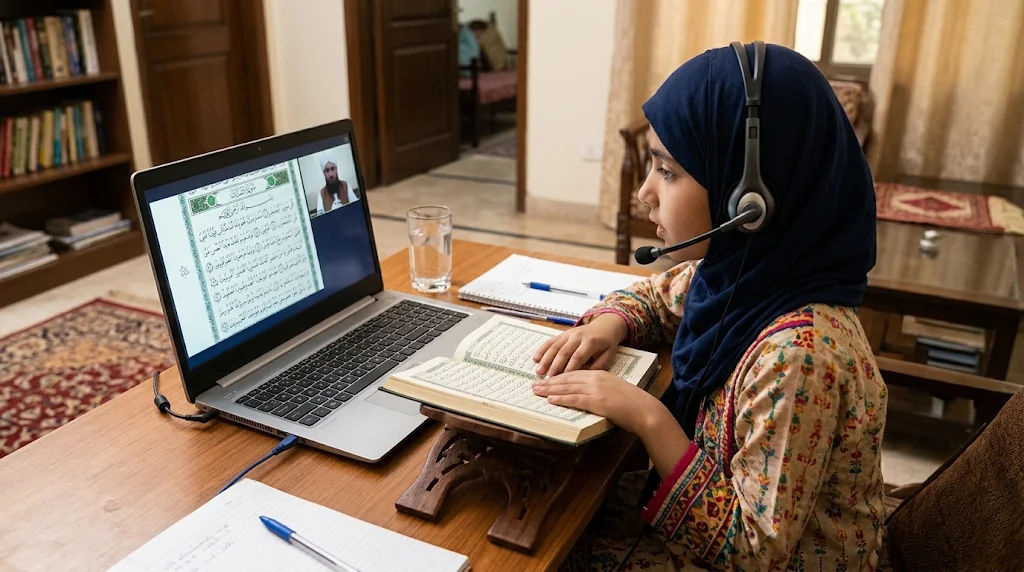
The answer is yes. Many Quran learning programmes for children include Tajweed as an important part of their teaching. However, the level of instruction depends on the teacher, learning programme, and the child's age and ability. Some classes introduce simple pronunciation rules, while others gradually teach more advanced Tajweed principles.
Tajweed helps children recite the Quran correctly, clearly, and respectfully. It teaches them how to pronounce Arabic letters, recognise different sounds, and understand where to pause during recitation. With patient guidance and regular practice, children can develop these skills naturally.
For Muslim families in Denmark, online and in-person learning opportunities can make Quran education more accessible. This comprehensive guide explains how Tajweed is taught, what children learn, how teachers organise lessons, and how parents can support their children's progress.
Tajweed in Quran Education
Tajweed is the set of rules that helps Muslims recite the Quran correctly. The word refers to improving or making something better. In Quran recitation, it involves giving every Arabic letter its proper pronunciation and characteristics.
Children who begin learning Tajweed early can develop better recitation habits. Instead of memorising verses without understanding their pronunciation, they learn how individual letters and sounds should be produced.
Why Is Tajweed Important for Children?
Tajweed is important because small pronunciation differences can sometimes affect the meaning of Arabic words. Learning the correct sounds helps children avoid common mistakes and develop confidence in their recitation.
It also encourages careful listening. Children learn to pay attention to their teacher's pronunciation and compare it with their own recitation.
Some important benefits include:
-
Correct pronunciation of Arabic letters.
-
Better understanding of Quranic recitation.
-
Improved listening and concentration.
-
Greater confidence when reading aloud.
-
Development of consistent recitation habits.
-
A stronger connection with Islamic learning.
Tajweed should be introduced according to a child's learning ability. Young beginners do not need to memorise every technical rule immediately.
When Should Children Start Learning Tajweed?
There is no single age that suits every child. Some children can begin recognising Arabic letters at an early age, while others benefit from starting with basic reading skills first.
A teacher should consider the child's concentration, language ability, and previous Quranic knowledge.
For younger learners, lessons usually focus on letter recognition, basic pronunciation, and short Quranic passages. Older children who can already read Arabic may be ready for more detailed Tajweed instruction.
Do Quran Lessons for Kids in Denmark Include Tajweed?
Yes, many programmes offer Tajweed as part of their Quran education. However, parents should confirm the exact syllabus before enrolling their children because not every class provides the same level of instruction.
Some programmes introduce Tajweed alongside Noorani Qaida or another beginner reading method. Others offer separate Tajweed classes for children who already know how to read Arabic.
The teaching approach usually depends on the child's current level.
Basic Tajweed Rules for Beginners
quran lessons for kids in denmark lessons generally introduce simple rules through examples and repetition.
Children may learn:
-
Correct articulation of Arabic letters.
-
Short and long vowel sounds.
-
Basic characteristics of letters.
-
The importance of pronunciation.
-
Simple rules of noon sakinah and tanween.
-
Basic rules of meem sakinah.
-
Natural elongation, known as Madd.
Teachers usually explain these concepts in simple language. They may demonstrate a sound first and then ask the child to repeat it.
Intermediate Tajweed Lessons
Once children become comfortable reading Arabic, they can move towards more detailed rules.
Intermediate lessons may cover:
-
Izhar.
-
Idgham.
-
Iqlab.
-
Ikhfa.
-
Different types of Madd.
-
Qalqalah.
-
Rules of stopping and starting.
-
Proper pronunciation during connected recitation.
The teacher should introduce these topics gradually rather than overwhelming children with technical terminology.
How Do Teachers Teach Tajweed to Children?
Teaching Tajweed to children requires patience, clear explanations, and regular practice. Children often learn pronunciation more effectively when they hear a sound, observe how it is produced, and repeat it under supervision.
In Denmark, families may choose online Quran education or attend local Islamic learning programmes, depending on availability.
Listening and Repetition
Listening is one of the most useful methods for developing accurate recitation.
The teacher reads a letter, word, or verse with correct pronunciation. The child listens carefully and repeats it.
This process helps children recognise differences between Arabic sounds that may initially seem similar.
Teachers can repeat difficult examples until the child becomes more comfortable.
Learning Through Examples
Children understand Tajweed more easily when rules are connected with actual Quranic words.
For example, a teacher can explain Madd by showing how certain vowel sounds are extended during recitation.
Instead of presenting several complicated rules at once, the teacher can focus on one concept and practise it using suitable examples.
Individual Pronunciation Correction
Every child has a different learning pace. Some may find particular Arabic letters difficult because those sounds do not exist in their everyday language.
A qualified teacher should listen carefully and correct mistakes in a supportive manner.
The goal is to help children improve without making them nervous about reading aloud.
Online Quran Lessons for Children Living in Denmark
Online education has made Quran learning more accessible for families living in different parts of Denmark.
Parents may find it difficult to travel regularly to an Islamic learning centre because of school schedules, work commitments, or distance. Online lessons can provide a convenient alternative.
Benefits of Online Tajweed Classes
Online classes offer several advantages.
Flexible scheduling: Parents can often arrange lessons around school and family responsibilities.
Individual attention: Some programmes offer one-to-one sessions, allowing teachers to focus on a child's pronunciation and progress.
Comfortable environment: Children can learn from home in a familiar setting.
Access to teachers: Families may have access to qualified Quran teachers who are not available in their immediate area.
Regular practice: Short, consistent lessons can help children develop stronger reading habits.
However, online learning requires a suitable internet connection, a quiet learning space, and parental supervision where appropriate.
How Online Lessons Usually Work
Most online Quran lessons take place through video communication platforms.
The teacher and student communicate directly. The teacher shares reading material, demonstrates pronunciation, and listens while the child recites.
A typical lesson may include:
-
Revision of previously learned material.
-
Introduction of a new Tajweed rule.
-
Teacher demonstration.
-
Guided reading practice.
-
Correction of pronunciation.
-
Short homework or revision exercises.
This structure allows children to learn progressively without rushing through the syllabus.
What Is the Role of Noorani Qaida in Learning Tajweed?
Noorani Qaida is commonly used to teach beginners how to recognise and pronounce Arabic letters.
It provides a foundation for Quran reading by introducing letters, vowel marks, joining sounds, and basic reading patterns.
For many children, learning Noorani Qaida is an important step before reading longer Quranic passages.
Learning Arabic Letters Correctly
Children first become familiar with the Arabic alphabet.
They learn the names and shapes of letters and practise producing their sounds.
This stage is especially important because some Arabic letters have similar appearances but different pronunciations.
A teacher can demonstrate the correct sound and explain how the tongue and mouth are positioned.
Moving From Letters to Words
After learning individual letters, children practise joining them together.
They gradually learn to read short words and sentences.
At this stage, teachers introduce basic pronunciation principles that prepare children for more structured Tajweed lessons.
Transitioning to Quran Recitation
Once children develop confidence in Arabic reading, they can begin reading Quranic passages.
The teacher listens and corrects mistakes while gradually introducing additional Tajweed rules.
This progression makes learning more manageable and helps children build a strong foundation.
Choosing a Qualified Tajweed Teacher in Denmark
Selecting the right teacher is one of the most important decisions parents make when arranging Quran education.
A teacher should have appropriate Quranic knowledge, sound recitation skills, and experience working with children.
Being able to recite the Quran correctly is important, but teaching children requires additional skills.
Check the Teacher's Quranic Qualifications
Parents should ask about the teacher's Quran education and Tajweed training.
A teacher with recognised qualifications or an established background in Quranic recitation may be better equipped to explain pronunciation rules accurately.
Parents can also ask whether the teacher has experience teaching children at different learning levels.
Look for Experience With Young Students
Children require a different teaching approach from adults.
A good teacher understands that young learners need repetition, encouragement, and manageable lessons.
They should be able to explain difficult ideas without using unnecessarily complicated language.
Ask About Lesson Structure
Before choosing a programme, parents should understand what each lesson includes.
Important questions include:
-
Does the programme include Tajweed?
-
Are beginner and advanced students taught separately?
-
Are lessons individual or in groups?
-
How frequently does the teacher assess progress?
-
Does the programme provide revision exercises?
-
Can parents receive progress updates?
These questions help families understand whether the programme matches their child's educational needs.
Making Tajweed Easy and Enjoyable for Children
Children are more likely to remain interested in Quran learning when lessons are engaging and suitable for their age.
A teacher does not need to make every session complicated. Simple activities can make pronunciation practice more enjoyable.
Use Short and Consistent Lessons
Long lessons can become difficult for younger children, particularly when they are learning unfamiliar sounds.
Short sessions with clear objectives often work better.
For example, one lesson may focus on recognising particular letters, while another introduces a simple pronunciation rule.
Consistency is more important than trying to cover too much material in one session.
Encourage Repetition
Repetition helps children remember what they have learned.
Parents can encourage their children to revise a few letters, words, or verses each day.
The practice should remain relaxed and supportive.
Use Positive Encouragement
Children may feel disappointed when they struggle with pronunciation.
Parents and teachers should recognise their efforts and celebrate small improvements.
Constructive feedback helps children understand what needs correction without losing confidence.
Include Listening Practice
Listening to accurate Quran recitation can help children become familiar with correct pronunciation and rhythm.
Parents can select suitable recitations and encourage their children to listen alongside their regular lessons.
However, listening should support teacher-guided practice rather than replace it.
Challenges Muslim Families May Face in Denmark
Muslim families living in Denmark may experience particular challenges when arranging Quran education.
These challenges can include limited access to nearby teachers, busy school schedules, language differences, and maintaining regular learning routines.
Balancing School and Quran Education
Children often have academic responsibilities, extracurricular activities, and family commitments.
Parents should arrange Quran lessons around these responsibilities.
A manageable schedule can help children continue learning without feeling overwhelmed.
Language Differences
Some children growing up in Denmark primarily speak Danish at school and may use another language at home.
Arabic may therefore be unfamiliar.
Teachers who can explain Tajweed in simple English, Danish, or a language the child understands may make learning easier.
Parents should ask about the languages used during instruction.
Finding Suitable Learning Opportunities
The availability of qualified teachers can vary depending on the family's location.
Online programmes can help address this challenge by connecting students with teachers from different regions.
Nevertheless, parents should carefully evaluate teaching quality rather than selecting a programme based only on convenience.
How Parents Can Support Their Children's Tajweed Progress
Parents play an important role in maintaining a child's interest in Quran learning.
Even when a qualified teacher provides formal instruction, family support helps children practise regularly.
Create a Regular Learning Routine
Choose a suitable time for Quran revision.
A consistent routine helps children remember their lessons and develop a positive learning habit.
Parents should avoid scheduling practice when children are extremely tired or distracted.
Listen to Their Recitation
Parents can occasionally listen while their children revise.
They do not need to correct every pronunciation mistake themselves, especially if they are unfamiliar with Tajweed.
Instead, they can encourage children to practise the examples provided by their teacher.
Communicate With the Teacher
Regular communication helps parents understand their child's progress.
Teachers can explain which rules the child has learned and which areas require additional practice.
This also helps parents provide suitable support at home.
Avoid Comparing Children
Every child develops reading and pronunciation skills at a different pace.
Comparing siblings or classmates can create unnecessary pressure.
Parents should focus on individual progress and encourage steady improvement.
How Long Does It Take Children to Learn Tajweed?
There is no fixed timeframe for learning Tajweed.
The duration depends on several factors, including the child's age, previous Quranic knowledge, lesson frequency, and amount of revision.
A beginner may need considerable time to become comfortable with Arabic letters before studying more detailed rules.
Children who already read Arabic may progress more quickly through the introductory material.
Factors That Influence Learning Progress
Several factors can affect how quickly children understand Tajweed.
Previous experience: Children who have studied Noorani Qaida may already understand basic Arabic reading.
Lesson frequency: Regular lessons provide more opportunities to practise.
Teacher guidance: Clear explanations and individual correction can improve understanding.
Home revision: Practising between lessons helps reinforce learning.
Learning environment: A quiet and supportive environment can improve concentration.
Parents should remember that the goal is accurate and confident recitation, not simply completing a course within a particular period.
What Should Parents Look for in a Quran Learning Programme?
Before enrolling a child, parents should evaluate the programme carefully.
A suitable learning programme should provide structured lessons, qualified instruction, and regular feedback.
A Clear Tajweed Curriculum
The programme should explain which Tajweed topics are included.
Parents should know whether children will learn basic pronunciation only or progress towards intermediate and advanced rules.
A structured syllabus helps families understand the educational journey.
Appropriate Class Sizes
Individual lessons can provide focused pronunciation correction.
Small group classes may also work well when children are at similar learning levels.
However, large groups may provide less opportunity for individual feedback.
Regular Progress Assessments
A good programme should assess reading ability and pronunciation periodically.
Teachers can use short recitation exercises to identify areas requiring improvement.
Progress reports also help parents understand whether the teaching approach is effective.
A Safe and Respectful Learning Environment
Children should feel comfortable asking questions and practising aloud.
Parents should check the programme's communication policies, teacher arrangements, and child safety practices.
A respectful environment encourages positive learning experiences.
Conclusion
So, do Quran lessons for kids in Denmark teach Tajweed? Yes, many Quran education programmes include Tajweed as an essential part of learning, although the depth and structure of instruction vary between teachers and institutions.
Tajweed helps children develop correct Arabic pronunciation, understand the rules of Quranic recitation, and read with greater confidence. Beginners usually start with Arabic letters, Noorani Qaida, and basic pronunciation before gradually progressing towards more detailed Tajweed principles.
For Muslim families in Denmark, both online and in-person learning can provide valuable opportunities. Online classes offer flexibility and access to teachers, while local learning programmes may provide opportunities for classroom interaction and community involvement.
Parents should carefully evaluate teacher qualifications, lesson structures, class sizes, and progress assessments before choosing a programme. They should also support their children through regular revision, encouragement, and communication with teachers.
Most importantly, Quran education should be a positive and gradual experience. Children do not need to master every Tajweed rule immediately. With patient teaching, consistent practice, and family support, they can build strong foundations for accurate Quran recitation.
Ultimately, choosing suitable quran lessons for kids in denmark can help children develop valuable religious knowledge and a lifelong appreciation of the Quran. The best learning programme is one that combines correct Tajweed instruction with kindness, understanding, and an approach suited to each child's individual needs.